Disclosure This post contains affiliate links. As an Amazon Associate, I earn from qualifying purchases at no extra cost to you.
Understanding Hip Mobility: The Challenge of Sitting Cross-Legged and How Pilates Can Help
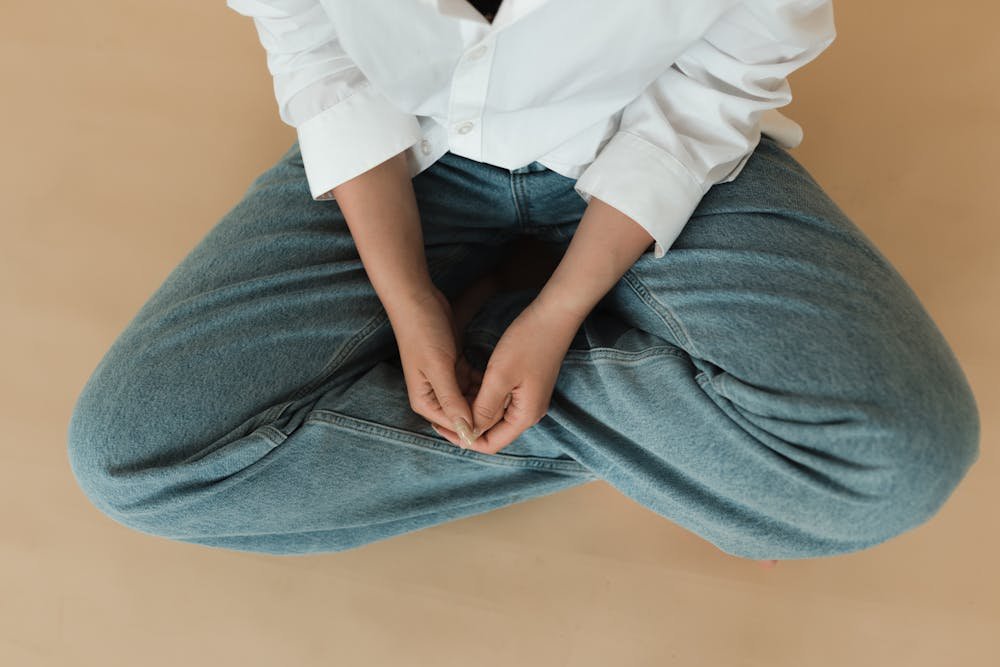
Have you ever attempted to sit cross-legged only to find your hips resisting the motion? If your knees are elevated towards the ceiling instead of resting comfortably on the ground, it’s a strong signal from your body about your hip mobility. Many people experience discomfort or an inability to sit cross-legged, which can impact their everyday activities. This is where Pilates plays a vital role.
Many routines in yoga and meditation include cross-legged sitting, making it a culturally and functionally significant position, especially during floor activities or casual gatherings. However, difficulty in adopting this pose is often a neglected indicator of limited hip flexibility and mobility.
Why Cross-Legged Sitting Can Be a Challenge for Adults
Finding it tough to sit in a cross-legged position is a prevalent issue, yet many individuals attribute it solely to aging. While it’s true that our bodies change over time, losing mobility isn’t an inevitable consequence of getting older. In fact, numerous exercises exist to promote healthy aging and maintain flexibility. One demographic particularly affected by restricted hip mobility is those who spend long hours at a desk.
Sitting cross-legged necessitates a specific range of motion, particularly in the hips, which requires a significant amount of external rotation. Unfortunately, most daily activities don’t demand this range of motion, causing your hips to become accustomed to limited movement over time. Even if you don’t notice it initially, you may come to a point where you attempt to sit cross-legged and realize it’s no longer an option.
Understanding Hip Tightness: What’s Really Going On?
To tackle the challenges of restricted hip mobility, many individuals turn to stretching exercises, particularly yoga. While flexibility is a crucial component, tight hips are often the result of a combination of prolonged sitting, muscle weakness, and altered movement patterns—not merely a lack of flexibility.
When you spend extended periods seated, your body adapts to this position, leading to changes in muscle functionality. Although various exercises are available to help individuals with sedentary lifestyles, these may not directly target the essential muscles needed for cross-legged sitting. The position calls for multiple muscles within the hip and pelvic area to engage harmoniously; any tightness in one muscle can render the entire position uncomfortable.
Effective Pilates Exercises to Enhance Hip Mobility
To open up your hip and pelvic muscles, certain Pilates exercises can be specifically beneficial. Embracing a Pilates routine can support mobility well into later stages of life, targeting hip flexibility more comprehensively and delivering quicker, longer-lasting benefits compared to other exercise options.
1. Supine Knee Drops
As a gentle opening exercise, supine knee drops serve as an excellent start to any hip-focused session. This warm-up move softly prepares your joints and reassures your nervous system that opening up is safe.
To execute this movement, lie on your back with your knees bent and feet resting hip-width apart on the floor. Ensure that your shoulders remain anchored to the ground as you gradually lower your knees to one side. Return to the center and then repeat the movement towards the opposite side. Engage in this exercise multiple times, breathing deeply throughout to enhance relaxation.
2. The Mermaid
Once warmed up, it’s time to delve deeper into your hip-opening routine. The Mermaid exercise targets different layers of restriction that may prevent you from sitting cross-legged comfortably. This movement effectively stretches the hips while elongating the obliques, pushing you through a full range of motion.
Start by positioning your legs in a ‘Z’ or 90/90 alignment. One knee should be bent and parallel in front of your body, while the other leg extends behind you. Extend both arms to the sides at shoulder height, then breathe deeply. Bend your torso to the left and place your left forearm on the ground, reaching your right arm overhead toward the left side. Hold this stretch and then repeat it on the other side.
3. Runner’s Lunge
The Runner’s Lunge is a dynamic movement that stretches the hip flexors and quadriceps. Begin in a high plank position, forming a straight line from head to heels.
Step your right foot forward, placing it just outside your right hand. Lift your chest and allow your hips to lower, feeling a delightful stretch through the front of your left leg. After holding this position for a few breaths, return to the starting plank and switch sides.
4. Figure Four Stretch
The Figure Four stretch specifically targets the glutes and the deeper hip rotators, which are crucial for external hip rotation.
To perform this stretch, lie flat on your back with your knees bent. Cross your right ankle over your left knee and flex both feet. Gently press your right knee away from your body while lifting your left foot off the ground. This motion allows for a deeper stretch as you draw both legs toward your chest.
5. The Clamshell
While stretching opens up the hips, strength is essential for maintaining that openness. The Clamshell exercise is a fantastic way to build strength in the hip area.
Begin by lying on your side with your hips and knees stacked, both bent at a 90-degree angle. Keeping your feet together, slowly rotate your top knee toward the ceiling, then lower it back down with control. Aim to repeat this movement 15 times on each side, focusing on controlled motions.
The Path to Greater Hip Mobility
Experiencing tight hips is not an irreversible condition; it lies well within your control to reverse or alleviate it through targeted movements. Consistently practicing these five Pilates exercises can effectively reduce hip tightness and enhance strength in your hips.
Incorporating even a short, 10-minute Pilates routine into your daily life can yield significant benefits. Before long, you might find yourself sitting comfortably cross-legged, benefiting from improved mobility and greater ease in your body. Whether you are a beginner or more experienced in Pilates, these exercises can pave the way for optimal hip health and flexibility.
