Disclosure This post contains affiliate links. As an Amazon Associate, I earn from qualifying purchases at no extra cost to you.
Understanding Knee Health for Runners and Hikers: Essential Exercises for Injury Prevention
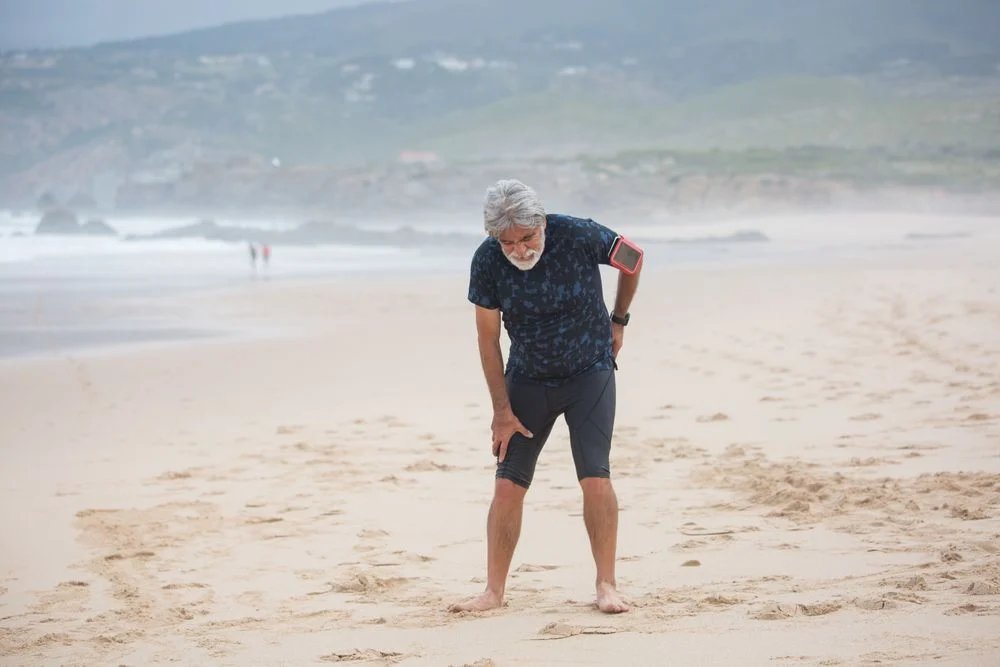
Experiencing discomfort around the kneecap after a long descent on a steep trail can be a common issue among runners and hikers. Often, the knee is wrongly blamed for the pain. In reality, the root of the problem may extend from the hip above or the ankle below. Thus, if you engage in running or hiking and want to safeguard your knees, it’s essential to understand that much of the preventive work must occur away from the knee joint itself.
This article delves into the reasons behind knee pain and presents a series of exercises designed to strengthen the muscles that support this crucial joint. If you are already familiar with the anatomical details, feel free to jump ahead to the list of exercises.
Why Your Knees Might Be Hurting Due to Your Hips and Ankles
The knee joint is primarily designed for bending and straightening, allowing for minimal rotational movement when flexed. However, it does not handle twisting or lateral forces effectively, particularly after extended use, such as during long runs or hikes.
On the other hand, the joints adjacent to the knee—namely, the hip and ankle—are much more flexible and adaptable. The hip joint allows for a greater range of movement in all directions, while the ankle must flex sufficiently to permit the shin to shift forward over the foot with each stride.
When these neighboring joints fail to function optimally, the knee compensates and bears the burden. Therefore, to effectively protect your knees, it is crucial to focus on strengthening both the hip and ankle.
Weakness in your hip muscles can cause the thigh to collapse inward with each foot strike. Alternatively, limited ankle mobility can lead to similar issues from below. Physical therapists refer to this inward collapse as dynamic knee valgus, a condition that many of the following exercises aim to address.
The Importance of Strength and Mobility
Downhill walking increases the demand on the knee joint. In a biomechanics study with healthy adults navigating a 19% slope, researchers discovered that the compressive force on the knee joint could surge to seven times the individual’s body weight in men and 8.5 times in women. This study also highlighted that during each stride, the hamstrings were almost continuously engaged, while the gastrocnemius—the larger calf muscle—served as a critical stabilizer.
With that understanding, here are seven exercises designed to bolster the muscles that protect the knee.
1. Side-Lying Leg Raise
One often-overlooked muscle for runners is the gluteus medius, located on the outer side of the hip. This muscle plays a pivotal role in maintaining pelvic stability and preventing the thigh from collapsing inward during single-leg activities—essential for running, which involves a sequence of one-legged landings.
To perform this exercise safely and effectively:
- Lie on your side with the bottom knee bent for support, extending the top leg straight.
- Slightly turn the top toes toward the ground and lift the leg about a hand’s width, leading with the heel.
- Lower the leg slowly, ensuring that your hips remain aligned and do not roll backward.
You don’t need to elevate the leg high; focus on feeling the activation in the side of your hip rather than in the front of your thigh.
2. Single-Leg Glute Bridge
The gluteus maximus, a powerful muscle at the back of your hip, is essential for propulsion. Combined with the gluteus medius, it helps ensure that the knee tracks appropriately over the foot.
Using one leg for this exercise provides better insight into each side’s strength:
- Lie on your back with your knees bent and feet flat on the floor.
- Lift one foot off the ground, bringing that knee toward your chest.
- Push through the heel of the standing foot to lift your hips, maintaining a straight line from shoulders to knees.
- Lower back down with control.
Ensure that your pelvis remains level throughout the movement. If one side droops, this signals the need for more targeted strengthening on that side.
3. Knee-to-Wall Ankle Rock
This variation of the ankle rock effectively incorporates monitoring your ankle’s mobility:
- Kneel on one knee facing a wall, positioning your front foot flat on the floor several inches away from it.
- Keeping your heel down, gently move your front knee forward over your toes towards the wall, then rock back.
- As you get stronger, gradually position your foot further from the wall to increase the challenge.
Check for differences in motion between sides; this exercise helps indicate whether you’re facing mobility issues worth addressing before tackling more strenuous runs.
4. Calf Raises (Two Variations)
The gastrocnemius muscle plays a crucial role in stabilizing the knee joint. To strengthen this muscle group effectively, perform calf raises in two ways:
- Stand on a step, allowing your heels to hang off the edge for a full range of motion.
- For the straight-knee variation, lift your heels until you’re on your toes, then slowly lower back down until your heels drop just below the level of the step.
- Perform the bent-knee variation by keeping your knees slightly bent during the exercise.
After mastering both variations, progress to performing the calf raises on one leg, focusing on controlled lowering for optimal benefits during descent activities.
5. Slow Step-Down
This exercise is particularly vital for those who frequently encounter hills:
- Stand on one leg atop a low step, letting the other foot dangle.
- Slowly bend the standing knee, lowering the dangling heel down toward the ground over the course of three to four seconds. Lightly tap the floor but avoid bearing any weight on it.
- Push through the standing leg to return to the starting position.
Always ensure that your knee tracks over your second toe throughout the movement. Should you notice it drifting inward, adjust to a lower step to develop better control.
6. Lateral Lunge
Given the forward motion in running and hiking, it’s essential to adapt to lateral movement as well:
- Stand upright with feet together.
- Step out widely to one side, bending that knee while keeping the opposite leg straight.
- Maintain alignment between the bent knee and your toes, keeping your chest elevated, then push back to the starting position.
Adapt the depth of your lunge to your comfort level; there’s no need to achieve maximum depth on your first try.
7. Single-Leg Romanian Deadlift
The hamstrings play a vital role in stabilizing the knee joint, especially during downhill activity:
- Begin standing on one leg with a slight bend in the knee.
- Hinge at your hips, extending the free leg behind you until you feel a stretch in the back of your standing thigh.
- Keep your hips level throughout the motion, then return to a standing position.
Utilize a wall or a chair for support initially and gradually advance to using a light dumbbell in the opposite hand once you gain confidence.
Prioritizing these exercises in your routine can bolster your knee health, particularly following your easier runs or hikes. Rotate through the exercises several times a week for balanced benefits. However, if discomfort persists or worsens, consulting a healthcare professional for comprehensive assessment and guidance is recommended. By incorporating these movements, you can nurture your knees and maintain your passion for running and hiking for years to come.