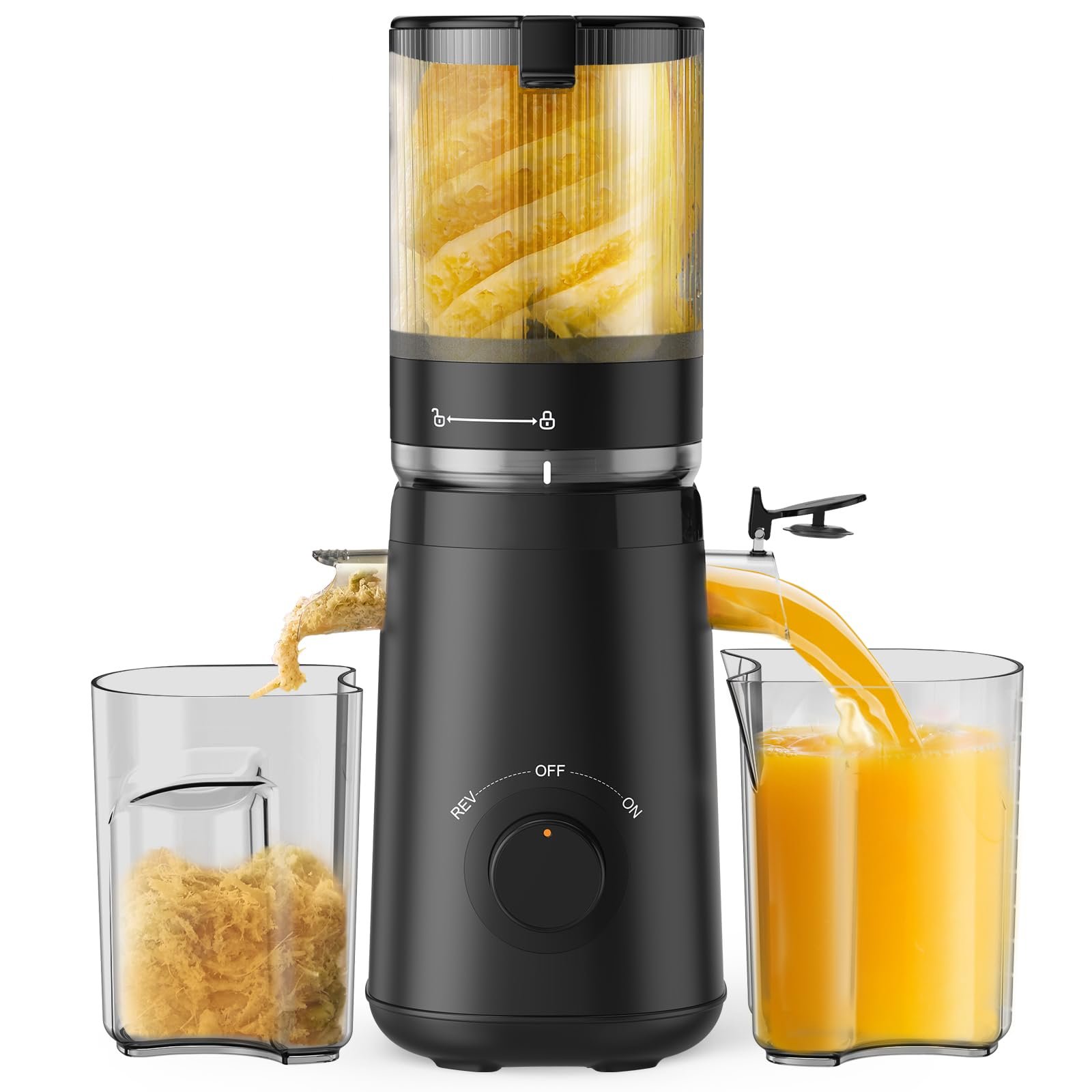
Juicing’s a popular way to get more fresh fruits and veggies in your diet. It lets you grab nutrients fast, without much fuss.
You’ll find all sorts of juicers out there, but slow juicers are getting a lot of love lately. They use a gentle, masticating process to squeeze out juice.
Slow juicers, or masticating juicers, crush fruits and veggies slowly to release juice. This method keeps more nutrients intact and cuts down on foam compared to those speedy, loud juicers.
They also run quieter, and honestly, they’re champs with leafy greens and softer fruits. If you’re juicing spinach or berries, it makes a difference.
Thinking about getting a slow juicer? A few things matter more than you’d expect.
Pick one that’s easy to clean—sticky pulp can be a pain. Motor speed and power should fit your juicing habits, whether you’re a casual sipper or a juice fanatic.
Don’t ignore size, either. Some models hog a lot of counter space, and that can get annoying in a small kitchen.
Best Slow Juicers
We’ve rounded up the top slow juicers for making fresh, healthy juice at home. These picks are user-friendly and treat your produce with care.
Check them out and see which one clicks for your kitchen.
Ninja NeverClog Juicer

This juicer suits anyone after easy, fuss-free juice with solid pulp control and quick cleanup.
Pros
- Powers through tough veggies without clogging
- Lets you choose how much pulp to keep
- Easy to take apart and clean, parts are dishwasher safe
Cons
- Can be a bit noisy during use
- Has several parts to wash and assemble
- Juice container size might be small for large batches
We put the Ninja NeverClog Juicer up against carrots and celery, and it didn’t slow down. Having total control over pulp made it easy to get the texture we wanted, whether we were in the mood for silky or thick juice.
Setup was straightforward, and cleaning felt easier than with other juicers we’ve tried. Dishwasher-safe parts are a lifesaver, though you’ll still need to handle a few components after juicing.
The compact footprint was a win for our counter space. It’s quieter than we expected for a juicer with this much power, though you’ll still hear it working. If you want a strong, easy-to-clean slow juicer, this one’s a solid bet.
YPONE Slow Juicer

This one’s great for anyone who wants fresh juice fast, with less prep and easy cleanup.
Pros
- Wide 5.4-inch chute lets us put in whole fruits and veggies
- Slow 55rpm pressing keeps juice fresh and full of nutrients
- Dual strainers reduce clogging and give a high juice yield
Cons
- Needs hand washing, not dishwasher safe
- Only one speed option might limit flexibility
- Can’t grind extra bits or seeds very finely
The YPONE’s big chute really saved us time—we barely had to chop anything. It felt sturdy and ran quietly, which surprised us. The juice tasted super fresh and smooth, honestly better than we expected.
Setup and breakdown were simple. The cleaning brush made pulp removal quick, but since it’s not dishwasher safe, you’ll need to wash by hand if you want it spotless.
It’s a one-speed machine, so you can’t tweak for different ingredients. Also, it’s better at pressing than grinding up hard seeds or pits. Still, it gave us fresh juice with hardly any hassle.
NutriBullet Slow Juicer

The NutriBullet Slow Juicer works well for folks who want quiet, efficient juicing and easy cleanup.
Pros
- Quiet motor that doesn’t make a mess
- Large feed chute fits bigger pieces
- Easy to clean with dishwasher-safe parts
Cons
- Slower than some other juicers
- Small juice container means frequent refills
- Plastic parts feel less sturdy than metal
We liked how quietly this juicer ran—it didn’t sound like a jet engine in the kitchen. Juice came out fresh, and the slow squeeze really seemed to keep the nutrients in.
The large chute meant less chopping, which is always a win. Cleanup was quick thanks to the no-drip spout and dishwasher-friendly parts.
The juice container is on the small side, so we had to empty it a couple times for bigger batches. Some parts felt a little lightweight. For everyday use in a small kitchen, though, it does the job without hogging space.
AMZCHEF Slow Juicer

This one’s a solid pick if you want to juice whole fruits easily and get smooth juice with very little mess.
Pros
- Wide 5.4-inch chute lets us put in whole apples and veggies
- Slow 60 RPM motor reduces clogging and keeps juice smooth
- Easy to put together and clean with just a few parts
Cons
- Takes up quite a bit of counter space because it’s tall
- Can be a bit slow with hard veggies like carrots
- The plastic parts feel less sturdy than the steel shell
The wide feed chute was a real time saver—we barely had to prep apples or carrots. The auto-cutting blade sliced through everything without much effort.
Juice came out clean and fresh, thanks to the slow pressing and triple strainers. Hardly any pulp ended up in the glass, which made for a nice, smooth drink.
The machine ran quietly, even after a long juicing session, and didn’t heat up much. Cleaning was fast—just a few parts to rinse, and the brush took care of juice stains.
The metal housing felt sturdy, so we’re betting this one will last a while. If you want a reliable slow juicer that’s easy to use and clean, this one’s worth a look.
TUUMIIST Cold Press Juicer

This juicer fits anyone who wants a quiet machine that extracts a lot of juice and cleans up easily.
Pros
- High juice yield with slow squeeze technology
- Large feed chute for whole fruits and veggies
- Simple to assemble and clean quickly
Cons
- Assembly can be a bit tricky at first
- Takes some space on the counter
- Cleaning the lids and small parts needs care
We’ve used this TUUMIIST juicer pretty often and like how it tackles all sorts of produce. The big feed chute means less chopping, which saves time, especially in the mornings.
It juices gently, so our drinks taste fresh and keep their nutrients. Cleaning was quicker than we thought—one-piece design and a brush made pulp removal easy.
This one’s quieter than a lot of juicers we’ve tried, which is a big plus if you’re juicing early. Figuring out the assembly took us a couple tries, but after that, it ran smooth every time.
If you’re after a cold press juicer that gives a good juice yield and doesn’t make cleanup a chore, this one deserves a spot on your counter.
Ganiza Slow Juicer

This juicer is great for anyone looking for a quiet, easy-to-clean machine that handles whole fruits and veggies without much prep.
Pros
- Large feed chute saves time on cutting
- Quiet operation with soft motor sound
- Comes with three different filters for varied juicing needs
Cons
- Instructions could be clearer for assembly
- Cleaning some parts takes careful attention
- Reverse function needed if clogging occurs
We’ve been using this juicer regularly and love that we can juice whole apples and carrots without chopping first.
That big chute really saves time. The motor runs quietly, so we don’t wake the house early in the morning.
The three filters make a difference, too. We like switching between them depending on what we’re juicing that day.
It handles fibrous veggies like celery and tough roots without slowing down. Cleaning is mostly easy but does need some patience around the filter edges.
The instructions helped us figure it out, though we had to double-check a few steps. The safety lock and reverse button on the control dial help if pulp gets stuck.
Brecious Slow Juicer

The Brecious Slow Juicer is a solid choice if you want quiet, nutrient-rich juice without much hassle.
Pros
- Quiet motor that doesn’t bother us while juicing
- Two-speed settings work well for soft and hard produce
- Easy to clean with simple disassembly and dishwasher-safe parts
Cons
- Juice can drip out after juicing, needs a wipe-up
- Feed chute is smaller, so you have to cut fruits and veggies more
- Slight learning curve to get used to the reverse function when clogging happens
We found this juicer easy to use right from the start. The two speeds gave us good control whether we juiced leafy greens or softer fruits like oranges.
It didn’t make a loud noise, so we could juice early in the morning without waking everyone up. Cleaning was straightforward since the parts come apart easily, and the included brushes help a lot.
We put some parts in the dishwasher, which saved time. The juice tasted fresh and smooth thanks to the slow masticating process.
The small feed chute means you need to cut produce into smaller sizes, which adds a bit of prep time. After juicing, some juice drips out from the machine, so it’s good to keep a cloth handy for quick cleanup.
ACOQOOS Slow Juicer

We found this juicer a great choice for anyone who wants easy juicing with minimal work and good juice yield.
Pros
- Large chute fits whole fruits for faster juicing
- High juice extraction means less waste
- Simple to clean, with few parts to handle
Cons
- Can overheat after long use and needs to cool down
- Cleaning still takes some effort despite simple design
- Stops automatically when lid opens, which can interrupt flow
The wide 5.3-inch chute was a big help for us. We could toss in whole apples and cucumbers without much chopping ahead of time.
This saved time and kept juicing simple. Juice came out smooth and full of flavor.
The machine squeezed nearly all the juice out of fruits and veggies. We noticed less pulp in our drinks, which made for a nicer texture.
Cleaning was mostly easy since it has fewer parts and no metal filter to scrub. Still, a quick rinse after every use helped prevent buildup.
We did have to wait when the motor overheated after about 30 minutes, but this safety feature gave us peace of mind. If you like fresh juice without much fuss, the ACOQOOS Slow Juicer fits well in that routine.
Elite Gourmet EJX600 Slow Juicer

This slow juicer works well for anyone wanting fresh juice without taking up much kitchen space.
Pros
- Quiet operation with slow, steady juicing
- Compact design fits easily on counters
- Easy to clean with only a few parts and dishwasher-safe pieces
Cons
- Needs produce cut into small pieces to avoid jams
- Motor can overheat if used too long
- Juice cup capacity is small, so may not suit larger batches
We found this juicer very handy for quick single servings. Its low speed means it extracts juice gently, which keeps flavors fresh and nutrients intact.
The noise level is low, so it’s nice to use without disturbing the whole house. The tall feed chute lets us toss in various fruits and veggies, but harder items like carrots need trimming first.
The small size means it fits in tight spots, but the 16 oz juice container fills up fast if you want more juice at once. Cleanup is fairly simple since there are only three parts to wash, and the included brush is helpful.
While the motor can shut off if it heats up too much, waiting a bit resets it easily.
Anybear Slow Juicer
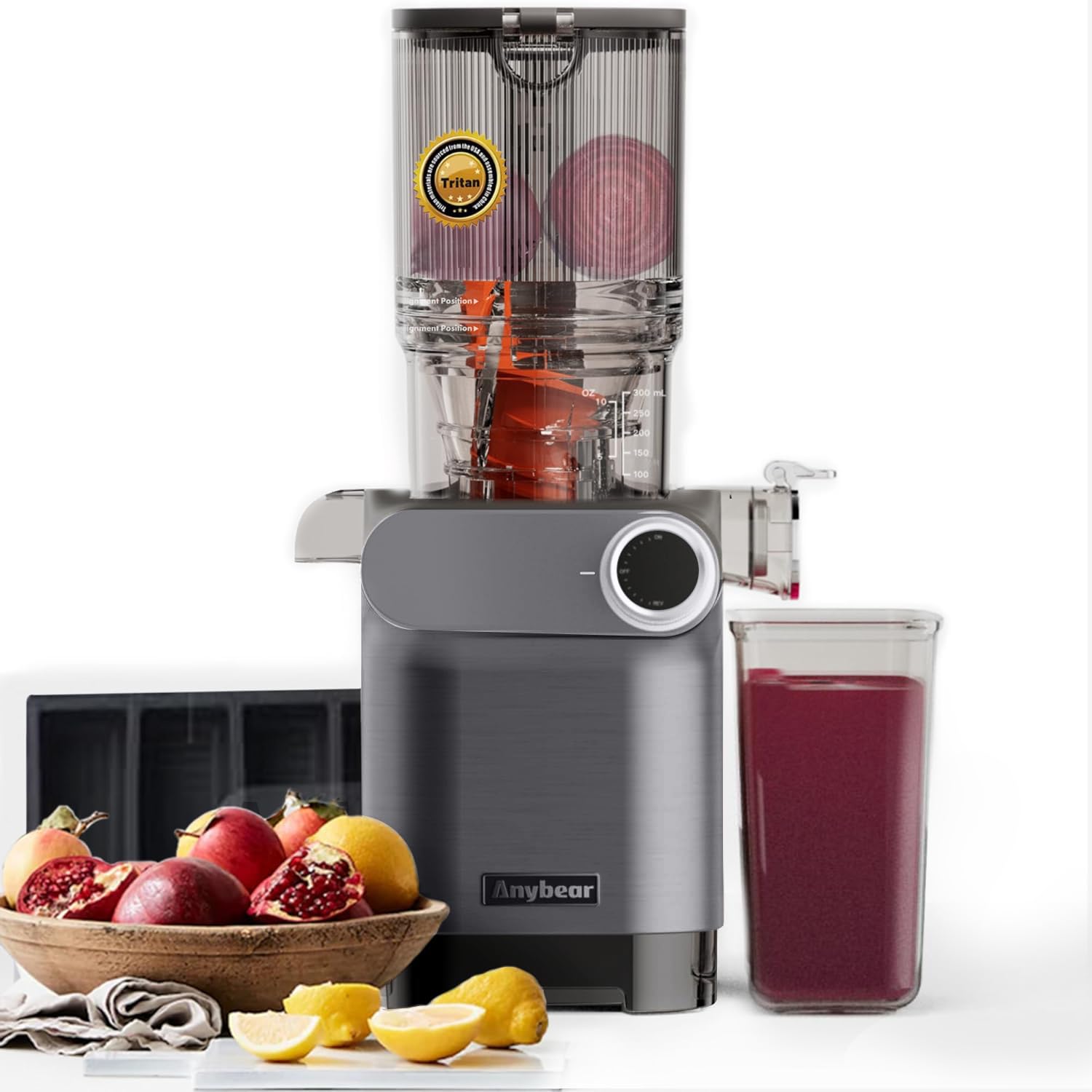
This juicer is perfect if you want easy prep and quiet, efficient juicing that keeps your drinks fresh.
Pros
- Wide 4.3″ chute lets us juice whole fruits easily
- Quiet and powerful motor with smooth juice output
- Simple to clean with just one rinse and quick disassembly
Cons
- Some parts could feel a bit bulky on a small countertop
- Not dishwasher safe, so hand washing is required
- Slight learning curve to assemble initially
The big feed chute really saves us time. Instead of chopping apples or carrots for ages, we just drop them in whole.
It makes mornings so much faster when we’re rushing to get juice ready. Juicing is smooth and low-speed, which helps keep the flavor fresh and the pulp minimal.
The motor runs quietly, letting us make juice any time without waking the whole house. Cleanup is easy too—just a quick rinse with the brush included, and parts come apart without fuss.
Buying Guide
When we choose a slow juicer, we want one that fits our needs and budget. The right juicer should be easy to use and clean.
It should also work well with the types of fruits and veggies we like to juice. We should look at the motor speed—slow juicers usually run at 40 to 80 RPM.
A slower speed means less heat and more juice, which helps keep nutrients. Next, size matters.
If we have limited kitchen space, a compact model might be better. But bigger machines often handle more produce at once.
We also need to check how easy it is to clean. Juicers with fewer parts can save us time.
Dishwasher-safe parts make cleanup simpler too. The type of juicer is important.
Some are horizontal, good for leafy greens and soft fruits. Others are vertical, which are easier to store and usually faster to assemble.
Here’s a quick look at key features:
| Feature | Why It Matters |
|---|---|
| Motor Speed | Slower = more nutrients preserved |
| Size | Fits our kitchen space |
| Cleaning Ease | Saves time and effort |
| Juicer Type | Matches fruits and veggies we use |
We should also think about noise levels if we want a quiet machine. Checking reviews helps us avoid common problems.
Frequently Asked Questions
We want to help you understand how slow juicers work and what makes them different. We’ll cover the benefits, how to choose one, and what features to look for.
Plus, we’ll talk about cleaning and what types of fruits and veggies work best.
What are the benefits of using a slow juicer compared to a traditional juicer?
Slow juicers press fruit and vegetables gently. This process keeps more nutrients and enzymes in the juice.
They also create less foam and oxidation, so juice lasts longer without losing flavor.
How can I pick the best slow juicer for my needs?
Think about what you want to juice most often. Some models work better with leafy greens, while others handle hard fruits well.
Check the size, noise level, and ease of cleaning too. These affect how often you’ll use it.
Is there a significant difference between slow juicers and cold press juicers?
No, slow juicers and cold press juicers are the same. Both use low speed to squeeze juice without heat.
This method helps keep juice fresh and preserves vitamins better than fast juicers.
What features should I look for when buying a slow juicer?
You’ll want a strong motor and parts that don’t make cleaning a huge chore.
Pick a design that actually fits your kitchen—nobody likes a bulky gadget that hogs the counter.
If the feeding tube is wide, you’ll spend less time chopping up fruit and veggies, which is always a win.
Juicers that squeeze out more juice and don’t sound like a jet engine are worth considering too.
How do I properly maintain and clean my slow juicer?
Honestly, it’s best to clean the juicer right after you use it, or else stuff gets stuck and it’s just a pain.
Most parts rinse off pretty easily with soapy water, but for those stubborn bits, a little brush goes a long way.
Can slow juicers handle all types of fruits and vegetables effectively?
Slow juicers do a solid job with soft fruits and leafy greens. They don’t have much trouble with hard veggies like carrots either.
But when it comes to super fibrous or really watery fruits, things can get tricky. Honestly, you’ll want to peek at the juicer’s manual for the nitty-gritty details.